
If you ask me, it’s pretty important! One of the things I’ve learned in my many years of riding and racing
is knowledge of what tire pressure works best for my style and the type of terrain I’m riding, as well as
for the tire itself.
It’s all about finding a happy medium between high/low pressures. I recently met someone who
complained that his Kenda Nevegal tires “sucked” because he didn’t have enough grip. He felt his tires
were garbage and were a complete waste of money. I was surprised to hear this because of how much I
love those particular tires. In fact, I run them on almost all my bikes!
I tried to explain to my new friend that Nevegals are awesome and that I use them on my DH and XC
bikes. Then I did the (decidedly unscientific) “squeeze test†on his tires. WHOA! Those things were rock
hard! So I asked him what pressure he was running, and it turns out he was at 40 PSI!
For the most part, I rarely pump up my tires over 35PSI; for some race courses I’ve gone as low as
25-27PSI. But for XC riding, I hover around 32-35PSI. Does the pressure really matter? Yes, it does,
and here’s why: mind you, I’m no Enginerd or Science guy but from my understanding it goes like
this…When the pressure is too high, your tire has a smaller contact area on the dirt; also, you’ll find
yourself bouncing way too much. Ultimately, you’ll get the feeling your tire just isn’t gripping as much as
it should/could.
Now the opposite to this would be running your tire pressure way too low. If you run your pressure too
low, you risk riding on the rim, thus causing pinch flats. In worst case scenarios, you may feel as if you
have no traction at all. I’ve had situations where my rear tire had a slow leak and I thought that I should
just ride it until I got back to the car. But this made my back end super loose without traction and when I
took a turn, the tire rolled right off the rim!
Basically, here’s what has worked for me, and it may take some experimenting to figure out which works
best for your tires, terrain and riding style:
25-27PSI-Loose conditions: An example would be a trail that has plenty of gravel, sand, and small rocks
with the base layer anywhere from 2-3 inches below the initial surface. A softer pressure will increase
grip and help eliminate front tire wallowing in the turns.
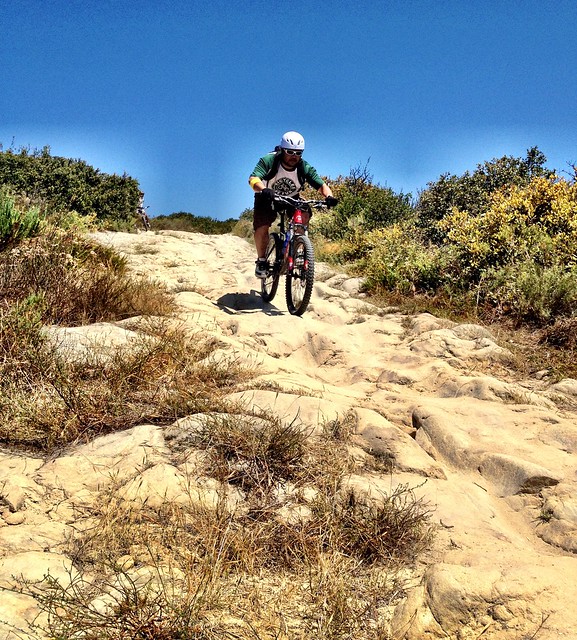
28-35PSI-Dry/Hard Pack: This type of riding condition could be seen on trails where XC riding is done.
Slickrock may also qualify as hardpack. This is where the dirt or clay is super dry; perhaps it hasn’t seen
any type of rain or moisture for months. With this pressure, you can roll faster and more confidently on
these trail conditions.
Remember to experiment with your tire pressure to find the best solution for you, your trail conditions
and your tires. One thing that I need to remind you is to not go down any lower than 20psi, your rim
(and maybe your skin) will thank you!
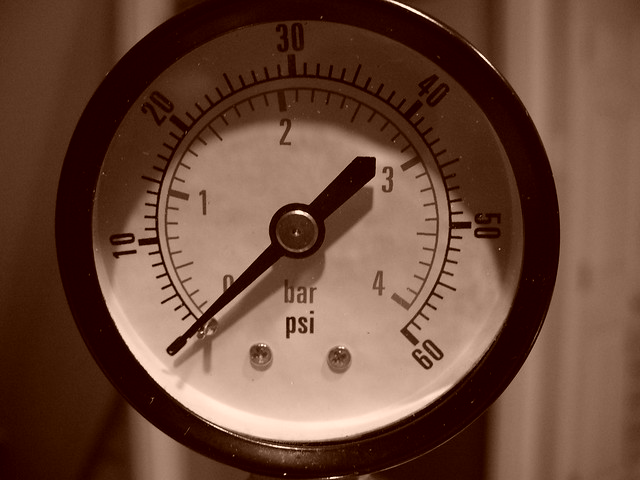

Hahahahaha! Ey this was about me!!! You were so right, dude! I took your advice and took it down to just below 30 psi. Huge difference in my descending grip! Much as gracias!!!