

Over the weekend I had the opportunity to test out my new 9 speed 36t Shimano cassette. The trail was Turnbull Canyon in Southern California which includes a 2 mile climb to the top down to a trail called the 7th Avenue Loop, then back up again to the top with steep switchbacks that we had to work our way through and down again through another trail called A-Line.
Below you’ll see the sprocket sizing used for the Shimano 36t cassette. On my original SRAM cassette, the cogs were:11,13,15,17,20,23,26,30,34. Notice that the cog sizes on the 36t are bigger than the SRAM 34t. Believe it or not, it makes a difference. Let me explain…
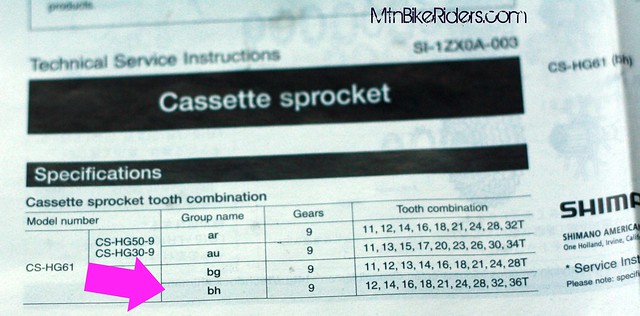
I’m no engineer or mathematician, but try to follow my logic. With the 36t, I’m using bigger cogs. The jump isn’t drastically different from the 34t, in fact they both have the same jump in cog size, from 1 to 4, depending on which gear you’re on. However, the larger cog sizes on the 36t make climbing easier. So for example, if you’re climbing a steep section that you normally would use a 34t cog on, this task would be much simpler on the 36t, not sure what the whole gear ratio is, but basically the bigger the gear in the back, the easier to pedal. It makes sense that the larger cog would provide greater ease while climbing.
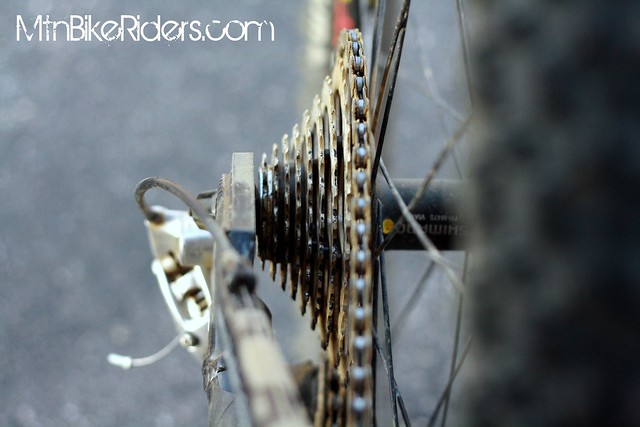
But at what cost? Truth be told, I’m not much of a climber, and with the 36t cassette, you are riding slower due to the bigger cogs. I really didn’t care if I was riding slower, all I knew was I making a large percentage of the climbs that I’d normally have a hard time on with the 34t cassette. So what’s the verdict when it comes to the 36t? First of all its not for everyone. The cassette was intended for 29er riders to help get their ginormous wheels over the climbs. But it can certainly apply to 26er riders with 9 speed drive trains. Secondly, if you’re a weight weenie, don’t bother. The larger cassette does weigh like a brick compared to the SRAM 34t.
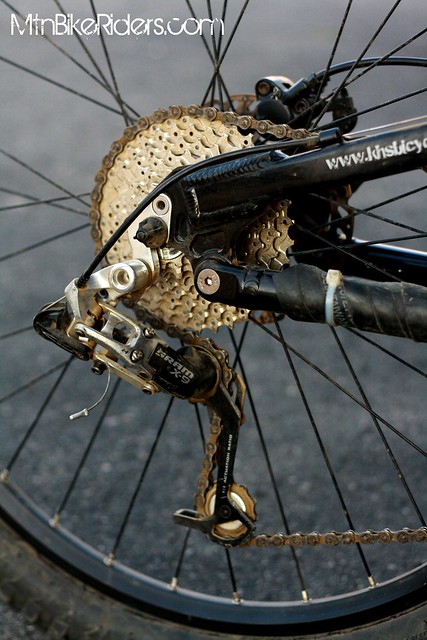
One more thing, there’s no need to swap out your whole drive train and shifters to the new fandangled 10speed groupo just so you can benefit from the 36t. I simply swapped out my rear cassette with the old one and went for a ride. There was no further adjusting with the rear derailleur needed.
Here I am grinding up the 2 mile climb. It’s tough, but the 36t made it a bit easier.

With all that said, I’m totally happy with the 9 speed 36t set up on my 26er mountain bike. It kinda made climbing a bit more fun. Forgot to mention that you can pick up your own 36t cassette from Jenson USA for $40.

-
-
-
-
-
Show CommentsThat thing is huge! (Thats what she said!)
Perhaps I should have kept the 36T rather than returning it. My main concern was/is the hub being able to take the extra torque. Shimano did come out with a hub that is supposed to be used with the bigger cassette, the 529 (or 629 for centerlocks). I dont have the high end hubs like CK or I9 that from what I heard can easily handle the stress and torque.
I’ll wait for your long term report before I change mine.
Hey RL I know why your climbs were slower. Yoda saya “Tire check presure, lower roll slowwwwerrrr.” See picture.:)
Yoda,
Funny you say that, after that pic was taken we took a quick break in which I pumped up the rear tire to at least 32psi. It was hovering around 25.
Did you have to use a new chain for the extra distance?
CJ, I did have newer chain only because I had broken it recently. But that’s the same chain that was used with my 34t cassette.